Determinants of smallholder farmers’ responsiveness to agroecological practices and principles in Ethiopia, Kenya and Madagascar
DOI:
https://doi.org/10.37905/drsj.v5i1.161Keywords:
Agroecology Transitioning, Principles, Smallholder Farmers’ Responsiveness, Sustainable AgricultureAbstract
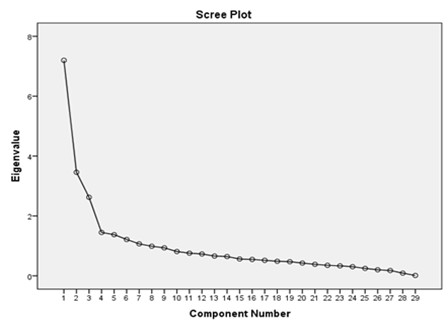
Smallholder farmers across East Africa face significant challenges in fully adopting agroecological practices, despite their demonstrated benefits for soil health, biodiversity, water conservation, and farm resilience. This study examined the determinants of smallholder farmers' responsiveness to agroecological principles and practices in Ethiopia, Kenya, and Madagascar using a sample of 993 farmers. A multi-stakeholder cross-sectional survey was conducted using a detailed, structured, and expert-validated questionnaire administered to smallholder farmers, considering multidimensional variation at both the farm and system levels. Multiple regression analysis and Principal Component Analysis (PCA) were employed to explore the underlying dimensions of adoption and predictors of responsiveness. The results revealed substantial variation across countries. In Kenya, farmers implemented 12 or more principles, whereas in Madagascar and Ethiopia, adoption was moderate, with lower uptake of agroecological principles. Farmer Field Schools (FFS) influenced adoption primarily through social learning, whereby farmers collaboratively experiment, observe outcomes, and share experiences, rather than through top-down technology transfer. Regression analysis showed that knowledge co-creation, education level, agroecology-specific land use, and incentives for participation in and sharing of agroecological practices were significant predictors of responsiveness, while structural constraints played a moderating role. These findings highlight the need to prioritize extension models that are inclusive, participatory, and adaptive, linking farmer education, locally appropriate land-use strategies, and targeted incentives to overcome structural barriers and ensure agroecology delivers both ecological resilience and improved livelihoods. PCA extracted seven components—ecological practices, extension methods, social learning, institutional enhancements, experiential knowledge, adoption behaviors, and gender/culture—which explained 63.38% of the total variance. The study concludes that farmers' responsiveness to agroecological principles is shaped by a dynamic interplay of structural, behavioral, and institutional factors. Strengthening participatory extension systems, co-creation platforms, and incentive frameworks can enhance uptake. These findings provide evidence-based insights for designing context-specific interventions to accelerate agroecological transitions towards sustainable agriculture.
Downloads
References
Adoyo, B., Geck, M. S., Adeyemi, C., Alpuerto, J., Arinloye, A. A. D.-D., Ateku, D., Autfray, P., Barahona, C., Chacha, R., Cluset, R., Innocent, F., Karari, V., Kersting, D., Mills, D., Sila, A., Oulu, M., Thomson, A., Weullow, E., Winowiecki, L., Woldemeskel, E., Zampela, P., & Sörensen, L. (2025). Agroecology for sustainable development: Evidence on multidimensional performance from a cross-country TAPE assessment in Africa. Frontiers in Sustainable Food Systems, 9, 1667882. https://doi.org/10.3389/fsufs.2025.1667882
African Climate Foundation (2025, Jan 2026) Extension and advisory services for agroecological transitions in Africa. Cape Town: African Climate Foundation. https://africanclimatefoundation.org/wp-content/uploads/2025/08/801023_A-Extension-and-advisory-WEB-1.pdf
Altieri, M. A., Nicholls, C. I., Henao, A., & Lana, M. A. (2015). Agroecology and the design of climate change-resilient farming systems. Agronomy for Sustainable Development, 35(3), 869–890. https://doi.org/10.1007/s13593-015-0285-2
Anderson, C.R., Bruil, J., Chappell, M.J., Kiss, C., & Pimbert, M. P. (2021). Agroecology now! Transformations towards more just and sustainable food systems. Springer. https://doi.org/10.1007/978-3-030-61315-0
Andres, C., Zundel, C., & Mauch, W. (2022). Scaling up agroecology: Integrating science, practice and social movements. Springer. https://doi.org/10.1007/978-3-030-85847-6
Babbie, E. R. (2016). The practice of social research (14th ed.). Cengage Learning. https://www.cengage.com/c/the-practice-of-social-research-15e-babbie/9780357360767/
Bakker, T., Dugué, P., & de Tourdonnet, S. (2021). Assessing the effects of Farmer Field Schools on farmers’ trajectories of change in practices. Agronomy for Sustainable Development, 41(1), 18. https://doi.org/10.1007/s13593-021-00667-2
Barrett, C.B., Christiaensen, L., Sheahan, M. and Shimeles, A. (2022) ‘On the structural transformation of rural Africa’. Journal of African Economies, 31(Supplement_1), pp. i3–i27. https://doi.org/10.1093/jae/ejab026
Barrera-Siabato, A. I., Castro-Triana, A. M., Colmenares-Cruz, R. A., & Moreno-Lopez, N. M. (2025). Evaluation of agroecological processes implemented in olive production systems: an analysis in Boyacá, Colombia. Frontiers in Sustainable Food Systems, 9, 1666553. https://doi.org/10.3389/fsufs.2025.1666553
Bhandari, S., Yadav, B., Yadav, P. K., Lahutiya, V., & Koirala, S. (2024). Exploring agroecological approaches for sustainable agriculture and rural development: A comprehensive review. Asian Journal of Research in Agriculture and Forestry, 10(1), 79-90. https://doi.org/10.9734/ajraf/2024/v10i1271
Borrello, M., Lombardi, A., Pascucci, S., & Cembalo, L. (2016). The seven challenges for transitioning into a bio-based circular economy in the agri-food sector. Recent Patents on Food, Nutrition & Agriculture, 8(1), 39-47. https://doi.org/10.2174/221279840801160304143939
Cavanagh, C. J., Chemarum, A. K., Vedeld, P. O., & Petursson, J. G. (2017). Old wine, new bottles? Investigating the differential adoption of ‘climate-smart’ agricultural practices in western Kenya. Journal of rural studies, 56, 114-123. https://doi.org/10.1016/j.jrurstud.2017.09.010
Charry, A., Vargas, A., Narjes, M., & Gonzalez, C. (2023). Agroecological transitions in value chains: Main findings, challenges, and opportunities for the agroecological transition of the value chains in the agroecological living landscapes (Agroecology Initiative Technical Report). 44 p. https://hdl.handle.net/10568/137773
Cicek, H., Topp, E., Plieninger, T., Blanco-Moreno, J. M., Gultekin, I., Mohamed, H. C., & El Gharras, O. (2023). A critical assessment of conservation agriculture among smallholders in the Mediterranean region: adoption pathways inspired by agroecological principles. Agronomy for Sustainable Development, 43(6), 72. https://doi.org/10.1007/s13593-023-00926-4
Davis, K., Nkonya, E., Kato, E., Mekonnen, D. A., Odendo, M., Miiro, R., & Nkuba, J. (2012). Impact of farmer field schools on agricultural productivity and poverty in East Africa. World development, 40(2), 402-413. https://doi.org/10.1016/j.worlddev.2011.05.019
Dagunga, G., Ayamga, M., Laube, W., Ansah, I. G. K., Kornher, L., & Kotu, B. H. (2023). Agroecology and resilience of smallholder food security: a systematic review. Frontiers in Sustainable Food Systems, 7, 1267630. https://doi.org/10.3389/fsufs.2023.1267630
Dosso, F., Gouroubera, M. W., Idrissou, L., & Moumouni-Mousa, I. (2024). The combination of extension approaches strengthens farmers’ innovativeness in sustainable land management. Environment, Development and Sustainability, 26(4), 10043-10062. https://doi.org/10.1007/s10668-023-03134-y
Dumbrell, N. P., Kragt, M. E., & Gibson, F. L. (2016). What carbon farming activities are farmers likely to adopt? A best–worst scaling survey. Land Use Policy, 54, 29-37. https://doi.org/10.1016/j.landusepol.2016.02.002
Dumont, B., Barlagne, C., Cassart, P., Duval, J. E., Fanchone, A., Gourdine, J. L., Huguenin-Elie, O., Kazakova, Y., Klötzli, J., Lüscher, A. and Oteros-Rozas, E. & Zagaria, C. (2025). Principles, barriers and enablers to agroecological animal production systems: a qualitative approach based on five case studies. animal, 19, 101367. https://doi.org/10.1016/j.animal.2024.101367
Duru, M., Therond, O., & Fares, M. (2015). Designing agroecological transitions: A review. Agronomy for Sustainable Development, 35(4), 1237–1257. https://doi.org/10.1007/s13593-015-0318-x
FAO, AUC, ECA, & WFP. (2023). Africa – Regional overview of food security and nutrition 2023: Statistics and trends. Accra: FAO. https://openknowledge.fao.org/handle/20.500.14283/cc8743en
FAO. (2021). The state of food and agriculture 2021: Making agrifood systems more resilient to shocks and stresses. Rome: FAO. https://openknowledge.fao.org/handle/20.500.14283/cb4476en
FAO. (2022). Farmer Field School guidance document: Planning for quality programmes. Rome: FAO. https://www.fao.org/family-farming/detail/en/c/413593/
FAO. (2016). Farmer Field Schools for sustainable agriculture: A guide for facilitators. Rome: FAO.
Foguesatto, C. R., & Machado, J. A. D. (2022). Adoption of sustainable agricultural practices in Brazil: Understanding the influence of socioeconomic and psychological factors. Journal of Agribusiness in Developing and Emerging Economies, 12(2), 204-222. https://doi.org/10.1108/JADEE-11-2020-0256
Gliessman, S. R. (2020). Agroecology: The ecology of sustainable food systems (4th ed.). CRC Press. https://doi.org/10.1201/9780429439734
Gong, B., Wang, J., Hatt, S., Desneux, N., Wang, S., & Jin, L. (2024). Intercropping with aromatic plants enhances natural enemy communities facilitating pest suppression in tea plantations. Arthropod-Plant Interactions, 18(4), 753-761. https://doi.org/10.1007/s11829-024-10074-5
HLPE. (2019). Agroecological and other innovative approaches for sustainable agriculture and food systems that enhance food security and nutrition. High Level Panel of Experts on Food Security and Nutrition of the Committee on World Food Security, Rome. https://www.fao.org/3/ca5602en/ca5602en.pdf
Hurley, P. D., Rose, D. C., Burgess, P. J., & Staley, J. T. (2023). Barriers and enablers to uptake of agroecological and regenerative practices, and stakeholder views towards ‘living labs’. Report from the Evaluating the productivity, environmental sustainability and wider impacts of agroecological compared to conventional farming systems project SCF0321 for DEFRA (33 pp.). Cranfield University & UK Centre for Ecology & Hydrology. https://nora.nerc.ac.uk/id/eprint/536608/1/N536608CR.pdf
Ifeanyi-obi, C. C., Aderinoye-Abdulwahab, S. A., Nwobodo, C. E., Nwokolo, C. I., Adesope, O. M., Allen, F., & Anyanwu, I. (2024, October). Enhancing climate resilient agriculture through gender-responsive practices, interventions and policies in Nigeria. In Triple Helix Nigeria SciBiz Annual Conference (pp. 281-303). Cham: Springer Nature Switzerland. https://doi.org/10.1007/978-3-031-81619-2_18
Intergovernmental Panel on Climate Change (IPCC). (2023). AR6 Synthesis Report: Climate Change 2023. https://www.ipcc.ch/report/sixth-assessment-report-cycle/
Iyabano, A., Leeuwis, C., Lie, R., Toillier, A., & Waters-Bayer, A. (2023). Making decisions about agroecological innovations: perspectives from members of farmers’ organizations in Burkina Faso. International Journal of Agricultural Sustainability, 21(1), 1–15. https://doi.org/10.1080/14735903.2023.2239056
Kanjanja, S. M., Mosha, D. B., & Haule, S. C. (2022). Determinants of the implementation of agroecological practices among smallholder farmers in Singida District, Tanzania. European Journal of Agriculture and Food Sciences, 4(5), 152-159. https://doi.org/10.24018/ejfood.2022.4.5.571
Kassie, G. W., Kim, S., & Fellizar Jr, F. P. (2017). Determinant factors of livelihood diversification: Evidence from Ethiopia. Cogent Social Sciences, 3(1), 1369490. https://doi.org/10.1080/23311886.2017.1369490
Kerr, R.B, Madsen, S., Stuber, M., Liebert, J., Enloe, S., Borghino, N., Parros, P., Mutyambai, D.M., Prudhon, M. and Wezel, A. (2021). ‘Can agroecology improve food security and nutrition? A review’. Global Food Security, 29, 100540. https://doi.org/10.1016/j.gfs.2021.100540
Kerr, R. B., Postigo, J. C., Smith, P., Cowie, A., Singh, P. K., Rivera-Ferre, M., Tirado-von der Pahlen, M.C., Campbell, D. & Neufeldt, H. (2023). Agroecology as a transformative approach to tackle climatic, food, and ecosystemic crises. Current Opinion in Environmental Sustainability, 62, 101275. https://doi.org/10.1016/j.cosust.2023.101275
Kirui, E. C., Kidoido, M. M., Akutse, K. S., Wanyama, R., Boni, S. B., Dubois, T., Dinssa, F. F., & Mutyambai, D. M. (2025). Factors influencing the adoption of agroecological vegetable cropping systems by smallholder farmers in Tanzania. Sustainability, 17(3), 1148. https://doi.org/10.3390/su17031148
Kohl R., & Cooley, L. (2005). Scaling Up – A Conceptual and Operational Framework: A Preliminary Report to the MacArthur Foundation’s Program on Population and Reproductive Health, MSI http://vibrantcanada.ca/files/kohl_scaleup.pdf
Kotir, J. H., Brown, G., Marshall, N., & Johnstone, R. (2017). Drivers of change and sustainability in linked social–ecological systems: An analysis in the Volta River Basin of Ghana, West Africa. Society & Natural Resources, 30(10), 1229–1245. https://doi.org/10.1080/08941920.2017.1290182
Le Coq, J. F., Sabourin, E., & Fouilleux, E. (2019, June). How can we think scaling up agro ecology transition with public policy support. The experience of PP-AL network in LAC. In Workshop: Stepping Up to the Challenge of Agroecological Transition Through Agricultural Research for Development. HAL Id: hal-02776233. https://hal.science/hal-02776233v1
Lee, S., & McCann, L. (2019). Adoption of cover crops by U.S. soybean producers. Journal of Agricultural and Applied Economics, 51(4), 527–544. https://doi.org/10.1017/aae.2019.20
Liebert, J., Benner, R., Kerr, R.B., Björkman, T., De Master, K. T., Gennet, S., Gómez, M.I., Hart, A.K., Kremen, C., Power, A.G. & Ryan, M. R. (2022). Farm size affects the use of agroecological practices on organic farms in the United States. Nature Plants, 8(8), 897-905. https://doi.org/10.1038/s41477-022-01191-1
Liniger, H. P., Mekdaschi Studer, R., Hauert, C., & Gurtner, M. (2011). Sustainable land management in practice: Guidelines and best practices for Sub-Saharan Africa. TerrAfrica, World Overview of Conservation Approaches and Technologies (WOCAT), & Food and Agriculture Organization of the United Nations (FAO). https://wocat.net/documents/82/SLM_in_Practice_E_Final_low.pdf
Madsen, S., Kerr, R. B., Kamilia, K., et al. (2025). Agroecology supports sustainable development in Africa: A review. Agronomy for Sustainable Development, 45, 34. https://doi.org/10.1007/s13593-024-00976-2.
Manyanga, M., Pedzisa, T., & Hanyani-Mlambo, B. (2023). Adoption of agroecological intensification practices in Southern Africa: A scientific review. Cogent Food & Agriculture, 9(1), 2261838. https://doi.org/10.1080/23311932.2023.2261838
Maughan, C., & Anderson, C. R. (2023). “A shared human endeavor”: farmer participation and knowledge co-production in agroecological research. Frontiers in Sustainable Food Systems, 7, 1162658. https://doi.org/10.3389/fsufs.2023.1162658
Méndez, V. E., & Nordstrom, K. L. (2025). A deeper dialogue for transformative agroecology can start from within. Agroecology and Sustainable Food Systems, 1–18. https://doi.org/10.1080/21683565.2025.2597008
Milheiras, S. G., Sallu, S. M., Loveridge, R., Nnyiti, P., Mwanga, L., Baraka, E., Lala, M., Moore, E., Shirima, D.D., Kioko, E.N. and Marshall, A.R., & Pfeifer, M. (2022). Agroecological practices increase farmers' well-being in an agricultural growth corridor in Tanzania. Agronomy for Sustainable Development, 42(4), 56. https://doi.org/10.1007/s13593-022-00789-1
Mockshell, J., Ogutu, S., Alvarez, D., Ritter, T., Steinke, J., Remans, R., & Quintero, M. (2023). Transitioning to agroecological food systems: A review of incentives for adoption of agroecological practices and outcomes. Bioversity International & the International Center for Tropical Agriculture (CIAT). https://cgspace.cgiar.org/items/b6c95f37-1683-4a51-a397-1127514cffe5
Mugisha, B., Agole, D., Ewing, J. C., Wacal, C., & Kule, E. B. (2025). Determinants of adoption of climate-smart agriculture practices among farmers in Sheema District, Western Uganda. Journal of International Agricultural and Extension Education, 32(2), 204–222. https://doi.org/10.4148/2831-5960.1164
Neumann, C., Behling, R., & Weiss, G. (2025). Biodiversity change in cultural landscapes—The rural hotspot hypothesis. Ecology and Evolution, 15(1), e70811. https://doi.org/10.1002/ece3.70811
Oliveira da Silva, F., Arellano, E. C., Felipe Viana, B., Silva‐Ferreira, V., Oliveira‐Rebouças, P., Rojas‐Arévalo, N., Muñoz‐Sáez, A., Jimenez, V. P., Zielonka, N. B., Crowther, L. P., & Dicks, L. V. (2024). Co‐production of agroecological innovations to improve sustainability in South American fruit farms. People and Nature, 6(2), 833–848. https://doi.org/10.1002/pan3.10613
Otitoju, M. A., & Enete, A. A. (2016). Climate change adaptation: Uncovering constraints to the use of adaptation strategies among food crop farmers in South-west, Nigeria using principal component analysis (PCA). Cogent Food & Agriculture, 2(1), 1178692. https://doi.org/10.1080/23311932.2016.1178692
Pedzisa, T., Rugube, L., Winter-Nelson, A., Baylis, K., & Mazvimavi, K. (2015). The Intensity of adoption of conservation agriculture by smallholder farmers in Zimbabwe. Agrekon, 54(3), 1-22. https://doi.org/10.1080/03031853.2015.1084939
Pham, L. D. M. H., Guerra, J. D. P., Nguyen, H. Q., Korbee, D., Tran, D. D., Ho, L. H., & Hermans, L. (2022). Socio-hydrological approach for farmer adaptability to hydrological changes: a case study in salinity-controlled areas of the Vietnamese Mekong Delta. Hydrological Sciences Journal, 67(4), 495-507. https://doi.org/10.1080/02626667.2022.2030865
Polonio-Punzano, A., Rahmani, D., & Cabello Delgado, M. D. M. (2021). Adoption and diffusion of agroecological practices in the horticulture of Catalonia. Agronomy, 11(10), 1959. https://doi.org/10.3390/agronomy11101959
Razanakoto, O. R., Raharimalala, S., Sarobidy, E. J. R. F., Rakotondravelo, J. C., Autfray, P., & Razafimahatratra, H. M. (2021). Why smallholder farms’ practices are already agroecological despite conventional agriculture applied on market-gardening. Outlook on Agriculture, 50(1), 80-89. https://doi.org/10.1177/0030727020972120
Rizzo, G., Migliore, G., Schifani, G., & Vecchio, R. (2024). Key factors influencing farmers’ adoption of sustainable innovations: a systematic literature review and research agenda. Organic Agriculture, 14(1), 57-84. https://doi.org/10.1007/s13165-023-00440-7
Silva, A. R., de Sá, M. E. G., Lelli Riga, H., Norder, L. A. C., & Borsatto, R. S. (2025). Agroecological transitions in traditional agricultural systems with agroforestry: Outcomes in biodiversity hotspots. Agroecology and Sustainable Food Systems, 1-23. https://doi.org/10.1080/21683565.2025.2524733
Slijper, T., Tensi, A. F., Ang, F., Ali, B. M., & van der Fels-Klerx, H. J. (2023). Investigating the relationship between knowledge and the adoption of sustainable agricultural practices: The case of Dutch arable farmers. Journal of Cleaner Production, 417, 138011. https://doi.org/10.1016/j.jclepro.2023.138011
Sufosec Alliance (2023) Farmers’ application of promising agroecological practices: Key learnings by and for practitioners on the critical success factors in the early stages of the agroecological transition. https://sufosec.ch/wp-content/uploads/2023/11/agroecology_keydoc_sufosec_lj_phase2_e.pdf
Teklewold, H., Kassie, M., & Shiferaw, B. (2013). Adoption of multiple sustainable agricultural practices in rural Ethiopia. Journal of Agricultural Economics, 64, 597–623. https://doi.org/10.1111/1477-9552.12011
Thornton, P. K., Rosenstock, T., Förch, W., Lamanna, C., Bell, P., Henderson, B., & Herrero, M. (2017). A qualitative evaluation of CSA options in mixed crop-livestock systems in developing countries. In Climate smart agriculture: Building resilience to climate change (pp. 385-423). Springer International Publishing. https://doi.org/10.1007/978-3-319-61194-5_17
TIGR2ESS. (2022). Evaluation of knowledge, attitude and practices of farmers in sustainable farming. https://tigr2ess.globalfood.cam.ac.uk/files/evaluation_of_kap.pd
van Asseldonk, M., Girvetz, E., Pamuk, H., Wattel, C., & Ruben, R. (2023). Policy incentives for smallholder adoption of climate-smart agricultural practices. Frontiers in Political Science, 5, 1112311. https://doi.org/10.3389/fpos.2023.1112311
Ward, P. S., Bell, A. R., Parkhurst, G. M., Droppelmann, K., & Mapemba, L. (2016). Heterogeneous preferences and the effects of incentives in promoting conservation agriculture in Malawi. Agriculture, Ecosystems & Environment, 222, 67–79. https://doi.org/10.1016/j.agee.2016.02.005
Wezel, A., Bellon, S., Doré, T., et al. (2009). Agroecology as a science, a movement and a practice: A review. Agron. Sustain. Dev. 29, 503–515. https://doi.org/10.1051/agro/2009004
Wezel, A., Herren, B. G., Kerr, R. B., et al. (2020). Agroecological principles and elements and their implications for transitioning to sustainable food systems: A review. Agron. Sustain. Dev. 40, 40. https://doi.org/10.1007/s13593-020-00646-z
Wezel, A., Casagrande, M., Celette, F., Vian, J.-F., Ferrer, A., & Peigné, J. (2014). Agroecological practices for sustainable agriculture: A review. Agron. Sustain. Dev. 34, 1–20. https://doi.org/10.1007/s13593-013-0180-7
Wezel, A., Herren, B. G., Kerr, R. B., Barrios, E., Gonçalves, A. L. R., & Sinclair, F. (2020). Agroecological principles and elements & their implications for transitioning to sustainable food systems. A review. Agron. Sustain. Dev. 40(6), 40. https://doi.org/10.1007/s13593-020-00646-z
Wezel, A., Migliorini, P., Brumer, A., Gaifami, T., Marchetti, A., Floymont, G., Guizard, G., Michel, E., Renaud, M.-A., Škorjanc, K., Allard, N., Bocchi, S., & Peeters, A. (2025). Application of the Original Agroecological Survey and Indicator System tool (OASIS) to organic and conventional farms in Belgium, France, and Italy. Fron. Agronomy. 7, 1581667. https://doi.org/10.3389/fagro.2025.1581667
Winsten, J. R., Gorman, E., & Gravitz, A. (2020). Coordinating a “basket of incentives” to facilitate resilience in the dairy sector. Journal of Soil and Water Conservation, 75(6), 144A-149A. https://doi.org/10.2489/jswc.2020.1005A
Wossen, T., Abdoulaye, T., Alene, A., Bantider, A., & Manyong, V. (2019). Measuring the impact of agricultural interventions on smallholder livelihoods: Evidence from Africa. Agricultural Systems, 172, 21–33. https://doi.org/10.1016/j.agsy.2019.01.010
Wright, D. R., Gordon, A., Bennett, R. E., Selinske, M. J., Lentini, P. E., Garrard, G. E., Rodewald, A.D. & Bekessy, S. A. (2024). Biodiverse coffee plantations provide co‐benefits without compromising yield. Journal of Sustainable Agriculture and Environment, 3(3). https://doi.org/10.1002/sae2.70005
Downloads
Published
How to Cite
Issue
Section
License
Copyright (c) 2026 Max Olupot, Oladimeji Idowu Oladele

This work is licensed under a Creative Commons Attribution-NonCommercial 4.0 International License.




.png)