Enabling economic independence among rural women through self-help groups: Evidence from the Samridh Tejeshwani initiative
DOI:
https://doi.org/10.37905/drsj.v4i2.142Keywords:
Gender Empowerment, Livelihood, Rural Development, Samridh Tejeshwanis, Self-Help Groups (SHGs)Abstract
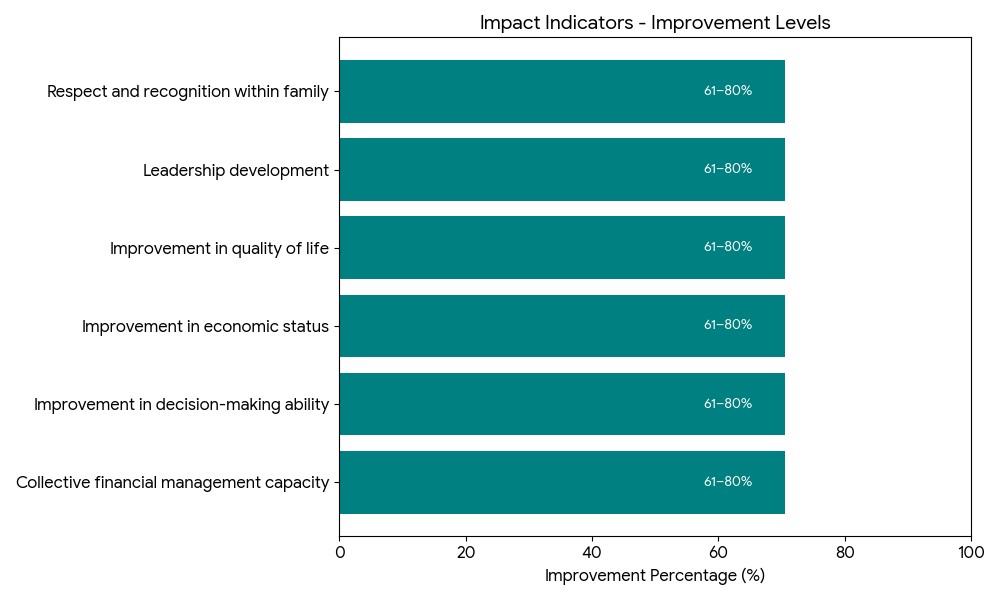
Rural women in India continue to face persistent socio-economic challenges, including limited financial inclusion, inadequate opportunities for skill development, and weak market linkages, which significantly restrict income generation and decision-making autonomy. Addressing these barriers is essential to achieving inclusive rural development and gender equity. Against this backdrop, the present study examines the role of Self-Help Groups (SHGs) in empowering rural women—referred to in this study as Samridh Tejeshwanis, denoting economically independent and socially empowered SHG members. This study aimed to develop and evaluate sustainable SHG-based livelihood models capable of enhancing women’s income, leadership, and collective decision-making through structured interventions in skill training, enterprise development, production, and market integration. A mixed-methods approach was employed, integrating qualitative evidence from field observations, interviews, and focus group discussions with quantitative analysis of pre- and post-intervention income data collected from nine SHGs across seven villages. Key interventions included vocational skill enhancement, financial literacy training, branding and packaging support, digital marketing facilitation, and convergence with government livelihood schemes. The findings indicate significant socio-economic gains, with the average monthly income of SHG members increasing by 61–80% following the interventions. In addition to income growth, members demonstrated marked improvements in communication skills, self-confidence, leadership, and collective decision-making. Enhanced social recognition and greater participation in community and panchayat-level activities were also reported. Overall, the study demonstrates that targeted and integrated SHG interventions can create sustainable pathways for women’s economic independence, strengthen social capital, and provide a scalable and replicable model for gender-inclusive rural livelihood development in India. These findings highlight the value of integrating capacity-building, market support, and policy convergence to accelerate gender-inclusive rural growth.
Downloads
References
Alrefaei, N., Aquinas, P. G., & Al-Maamari, O. A. (2023). Self-help groups (SHG) in India: A path toward empowerment and poverty reduction. Social Work with Groups, 46(3), 249–263. https://doi.org/10.1080/01609513.2022.2159612
Bernardiner, R., & Mangala, S. M. (2017). Collective empowerment of women through self-help groups. International Journal of Scientific and Research Publications, 7(8), 89–99. http://www.ijsrp.org/research-paper-0817.php?rp=P686684
Biju, D. S., & Tantia, V. (2024). Social capital in the form of self-help groups in India: A powerful resilient solution to reduce household financial vulnerability. Social Work with Groups, 47(3), 282–295. https://doi.org/10.1080/01609513.2023.2257754
Debi, Y. S., Musa, F. T., & Latare, S. (2023). Pemberdayaan Kelompok Usaha Wanita Tani di Desa Juriya Kecamatan Bilato Kabupaten Gorontalo. Dynamics of Rural Society Journal, 1(2), 60–67. https://doi.org/10.37905/drsj.v1i2.11
Deininger, K., & Liu, Y. (2013). Economic and social impacts of an innovative self-help group model in India. World Development, 43, 149–163. https://doi.org/10.1016/j.worlddev.2012.09.019
Islam, M. A., & Narzary, M. (2021). Impact of self-help groups on socio-economic development of women in Assam: A review of studies. International Journal of Innovative Research in Multidisciplinary & Professional Studies, 9(5), 1–8.https://www.ijirmps.org/research-paper.php?id=1234
IWWAGE – Initiative of LEAD at Krea University. (2021). Working or Not: What determines women’s labour force participation in India? https://iwwage.org/wp-content/uploads/2021/05/IWWAGE-Working-Report-upd.pdf
Kumar, R. (2025). Impact of self-help groups on women’s empowerment in rural Bihar, India: Evidence from a mixed methods study. Journal of Management and Social Research, 2(3), 528–534. https://doi.org/10.61336/jmsr/25-03-6
Kumar, V., & Khunger, S. (2025). Rural development in Haryana: Gender dynamics, infrastructure, and agricultural progress. Dynamics of Rural Society Journal, 3(1), 61–76. https://doi.org/10.37905/drsj.v3i1.43
Kumari, R., Boerma, B., Ahmed, R., Suman, S., Sharma, S., & Dhawan, S. (2025). Assessing economic and livelihood impacts of water hyacinth utilisation in rural India: A mixed-methods study. Dynamics of Rural Society Journal, 4(1), 60–69. https://doi.org/10.37905/drsj.v4i1.96
Kurtz, L. F., & Powell, T. J. (2008). Three approaches to understanding self-help groups. Social Work with Groups, 10(3), 69–80. https://doi.org/10.1300/J009v10n03_06
Latare, S., Harold, R., Bumulo, S., & Ali, A. (2023). Dampak program keluarga harapan dalam pengentasan kemiskinan di Desa Bangga Kecamatan Paguyaman Pantai. Dynamics of Rural Society Journal, 1(1), 10–19. https://doi.org/10.37905/drsj.v1i1.9
Ministry of Finance, Government of India. (2024, March 20). Recommendations of the Committee on Financial Inclusion. Press Information Bureau. https://pib.gov.in/newsite/erelcontent.aspx?relid=35141
Ministry of Rural Development, Government of India. (2023). Deendayal Antyodaya Yojana – National Rural Livelihood Mission (DAY-NRLM). Official programme overview, Government of India. Available at: https://manipursrlm.gov.in/day-nrlm/
Monika, & Marwah, A. (2024). Empowering self-help groups (SHGs): Paradigm shift in DAY-NULM. ShodhKosh: Journal of Visual and Performing Arts, 5(6), 69–74. https://doi.org/10.29121/shodhkosh.v5.i6.2024.3674
Rathi, K. (2023). Women empowerment through self-help groups in slum areas of Delhi. International Journal of Multidisciplinary Educational Research, 12(2), 261–272. https://ijmer.in/issues/volume12/volume12-issue2(2).aspx
Sharma, P., & Varma, S. K. (2008). Women empowerment through entrepreneurial activities of self-help groups. Indian Research Journal of Extension Education, 8(1), 46–52. https://seea.org.in/irjee/view-content/women-empowerment-through-entrepreneurial-activities-of-self-help-groups
Swain, R. B., & Wallentin, F. Y. (2009). Does microfinance empower women? Evidence from self-help groups in India. International Review of Applied Economics, 23(5), 541–556. https://doi.org/10.1080/02692170903007540
Vishnuvarthini, R., & Ayyothi, A. M. (2016). The role of SHGs in women empowerment: A critical review. IOSR Journal of Economics and Finance, 7(3), 33–39. www.iosrjournals.org
Downloads
Published
How to Cite
Issue
Section
License
Copyright (c) 2026 Shikha Dhawan, Rinki Kumari Kumari, Swapan Suman, Sushil Kumar Sharma, Sudheer Nadipally

This work is licensed under a Creative Commons Attribution-NonCommercial 4.0 International License.



.png)